
Since 27 September, a new set of EU rules applies to what companies can say about the environmental performance of their products. The rules come from Directive 2024/825, often called the Empowering Consumers Directive. They apply to every business selling to consumers in the EU, from a food startup with one product to an energy scale-up with a million customers. There's no transition period, no small business exemption, and no "we're a climate company, we're the good guys" exemption either.
We spend a lot of our time reading the environmental claims on startup websites. Most of them are made in good faith by founders who believe in what they're doing. That's exactly why we think this is worth a plain language summary. Not because anyone is about to get fined, but because the habits that used to be normal now carry a risk, and the fix is usually easy.
01What the directive actually does
It adds a handful of practices to the EU's list of misleading commercial practices. Four of them matter most for a startup, whatever it sells.
Generic claims without proof
Words like "sustainable", "eco-friendly", "green", "climate friendly" and "biodegradable", used on their own, are no longer allowed unless you can show recognised excellent environmental performance. In practice, for a small brand, that means: don't use them as a tagline.
Claims about the whole product that only cover one part
If your packaging is compostable, you can say your packaging is compostable. You can't say the product is.
Carbon neutral claims based on offsetting
Saying a product is carbon neutral, climate positive or has a reduced impact because you bought offsets is now on the banned list. You can still talk about offsetting. You can't use it to describe the product itself.
Sustainability labels and future promises
A badge or label has to come from a certification scheme or a public authority; a logo you designed yourself doesn't count. And a promise like "net zero by 2030" needs a detailed, public plan with measurable targets and independent monitoring behind it.
A QR code doesn't rescue a generic claim. The specification that makes "eco-friendly" mean something has to sit next to the claim, on the same label or page. And if there's no room to specify it, the Commission's answer is simple: then don't make the claim.
02Who it reaches, and it's not only brands with a shelf
The examples people use for this directive are usually packaging: a jar, a tray, a box. That's where the claims are easiest to photograph. But the rules are about the claim, not the product category, and we see the same patterns on the websites of mobility apps, energy startups, building material companies, food tech and software platforms.
Directly covered. Apps, subscriptions, energy contracts, rental and swap platforms, repair services, a web shop, a market stall: if a consumer can buy it, the directive applies to how you describe it.
Not directly covered: the directive sits inside EU consumer law. But your customers are. A consumer brand that puts your ingredient, material or software on its label is liable for the claim, so it will ask you for the evidence. B2B claims also fall under the EU's misleading advertising rules, enforced through the courts rather than the consumer authority.
Same rules, more exposure. Enforcement follows visibility, investors and corporate buyers now ask for substantiation as standard, and a scale-up's homepage is read by far more people than a market stall's sign.
Six claims from outside the supermarket
Lightly disguised, all from sectors we work in or see at accelerator programmes. Same test every time: generic, or specific and sourced?
Allowed or not? Six claims we've seen on real websites, lightly disguised.
Tap your answer. The rule behind each one is explained after you choose.
03What didn't change
This is the part that gets lost. Specific, measured and sourced claims are still fine. "Made from 80% rescued bread" is fine, if it's true. The sentence below is also fine, and it says more than "sustainable" ever did:
0.59 kg CO₂e avoided per kg of bread we rescue · ADEME emission factors · screening level
The directive does not require third party verification of your claims before you publish them. That requirement was part of a separate proposal, the Green Claims Directive, which has not been adopted. Negotiations on it stalled in 2025 and its future is unclear.
If someone tells you that you now need a certified verification of every number, check what they're selling.
04Five patterns, shown on things you can hold
After reviewing the public claims of a few dozen circular and climate startups this year, the same things keep showing up. None of them are lies. All of them are now a problem. We've put them on consumer products because they're easiest to see there; the same five appear on B2B decks and SaaS landing pages.
 Claim as publishedWhat it should say
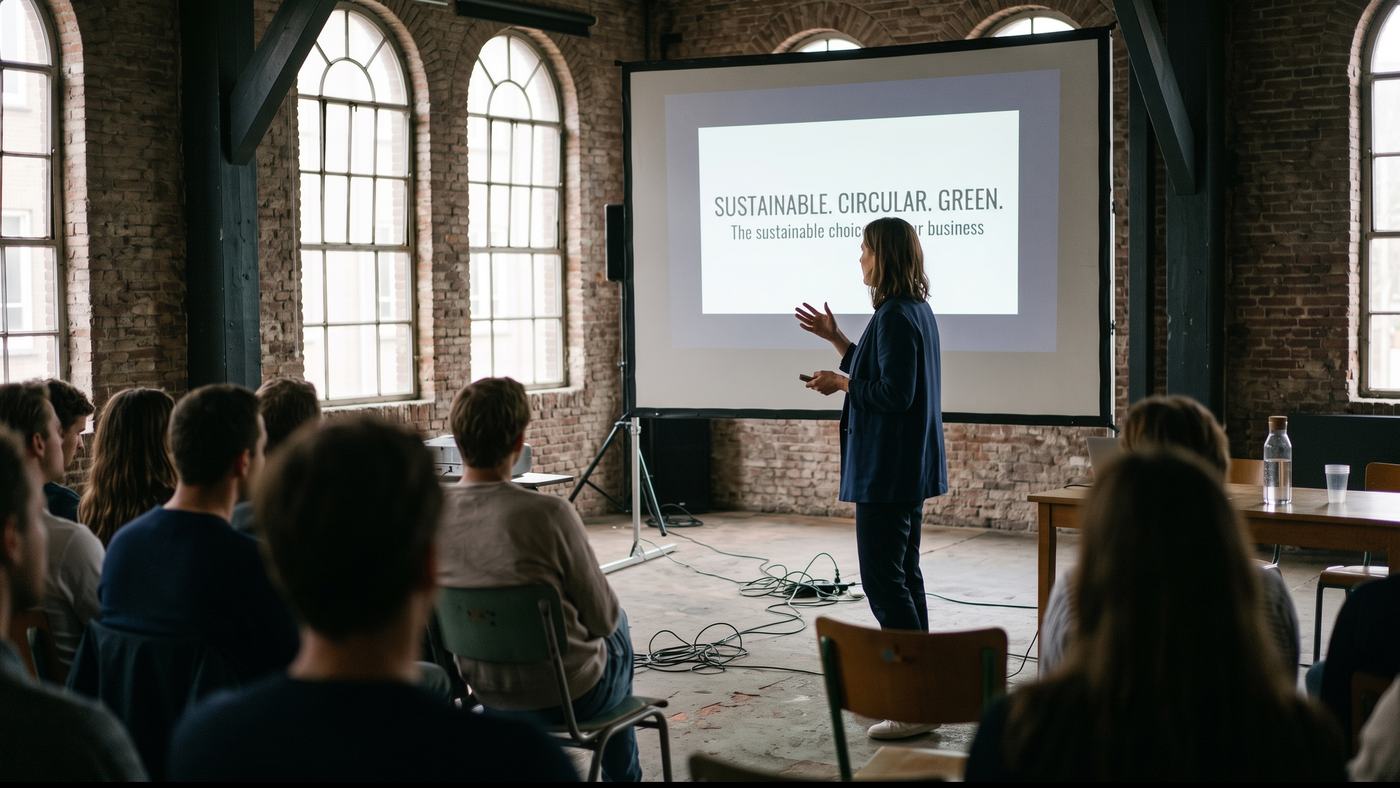
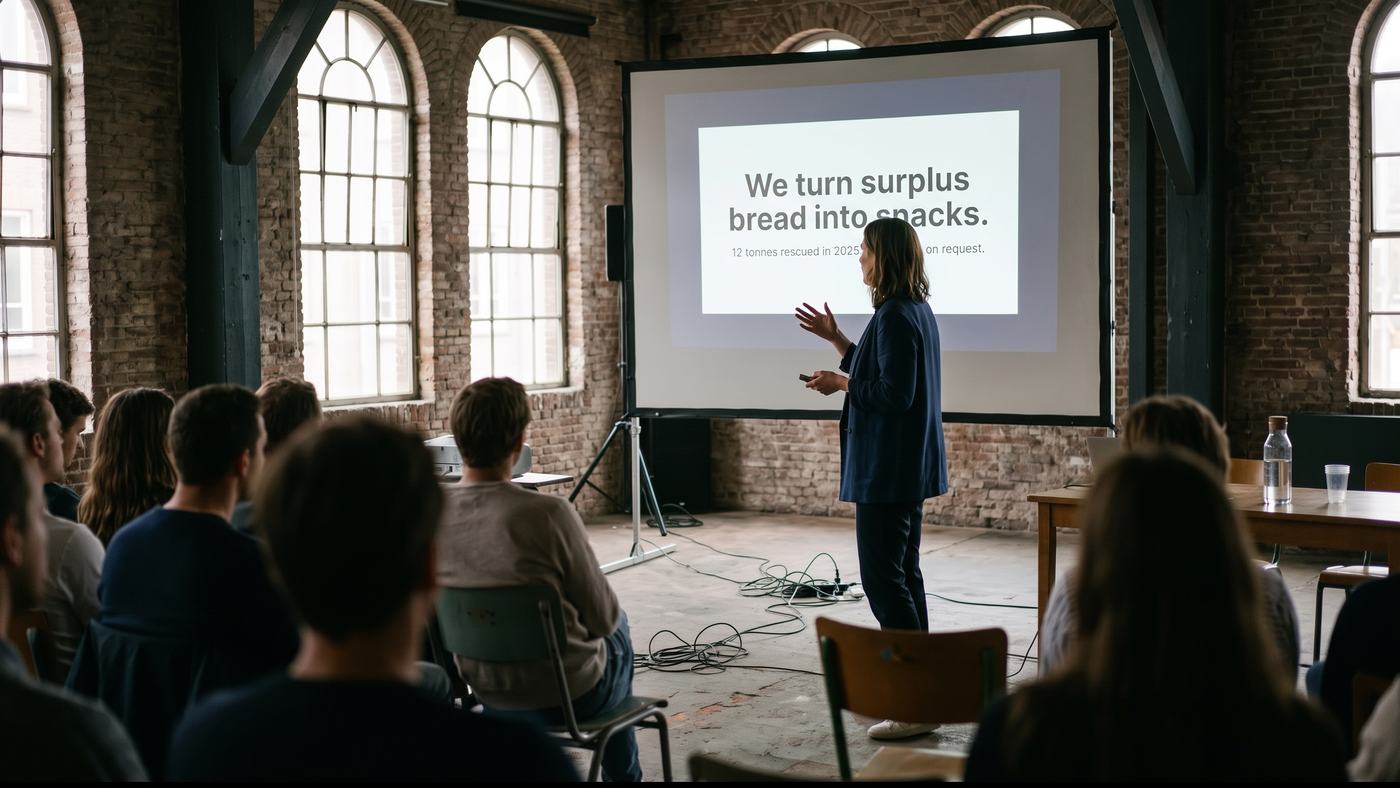
"Sustainable" in the tagline
Replace the adjective with what you actually do. "We turn surplus bread into snacks" is a fact an investor can picture and you can prove. "Sustainable" is a mood.
Drag the bar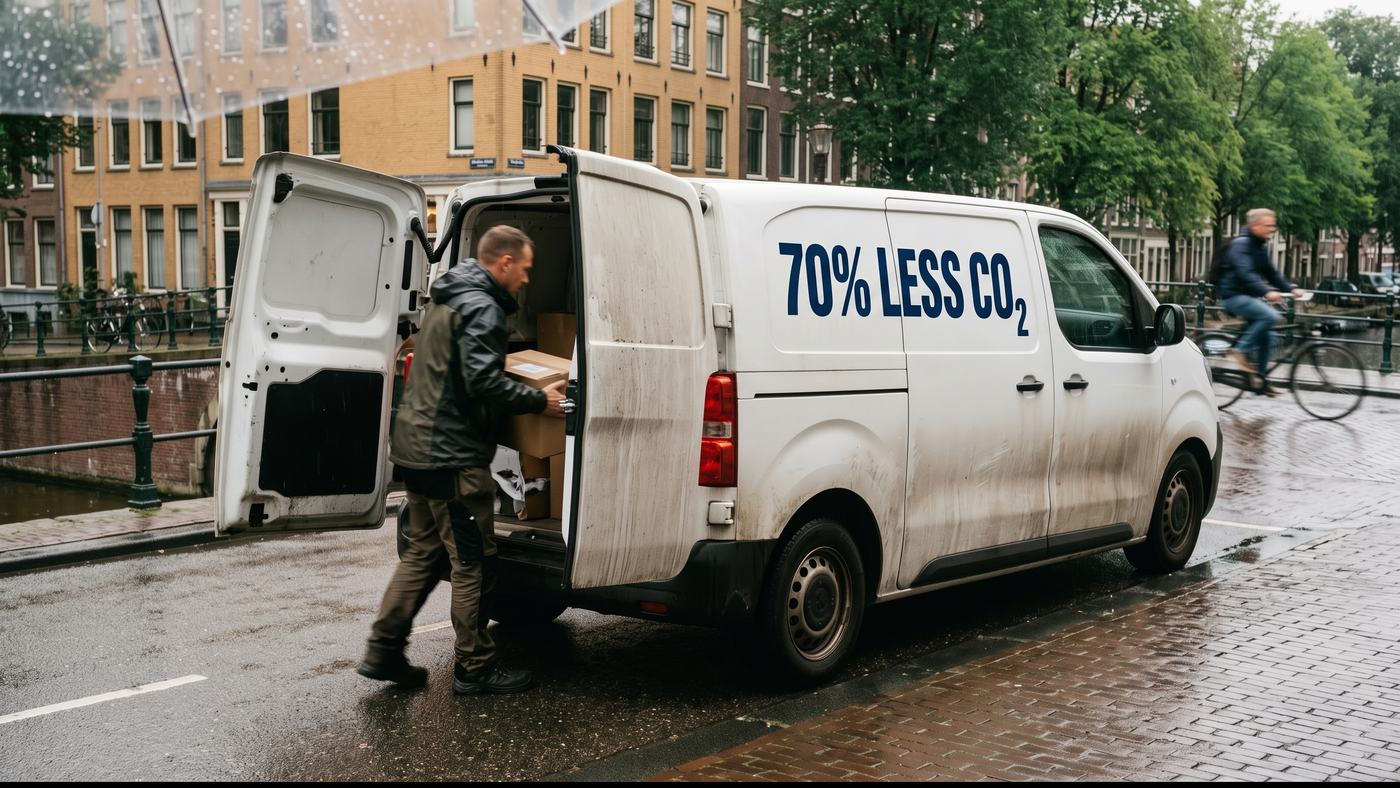
 Claim as publishedWhat it should say
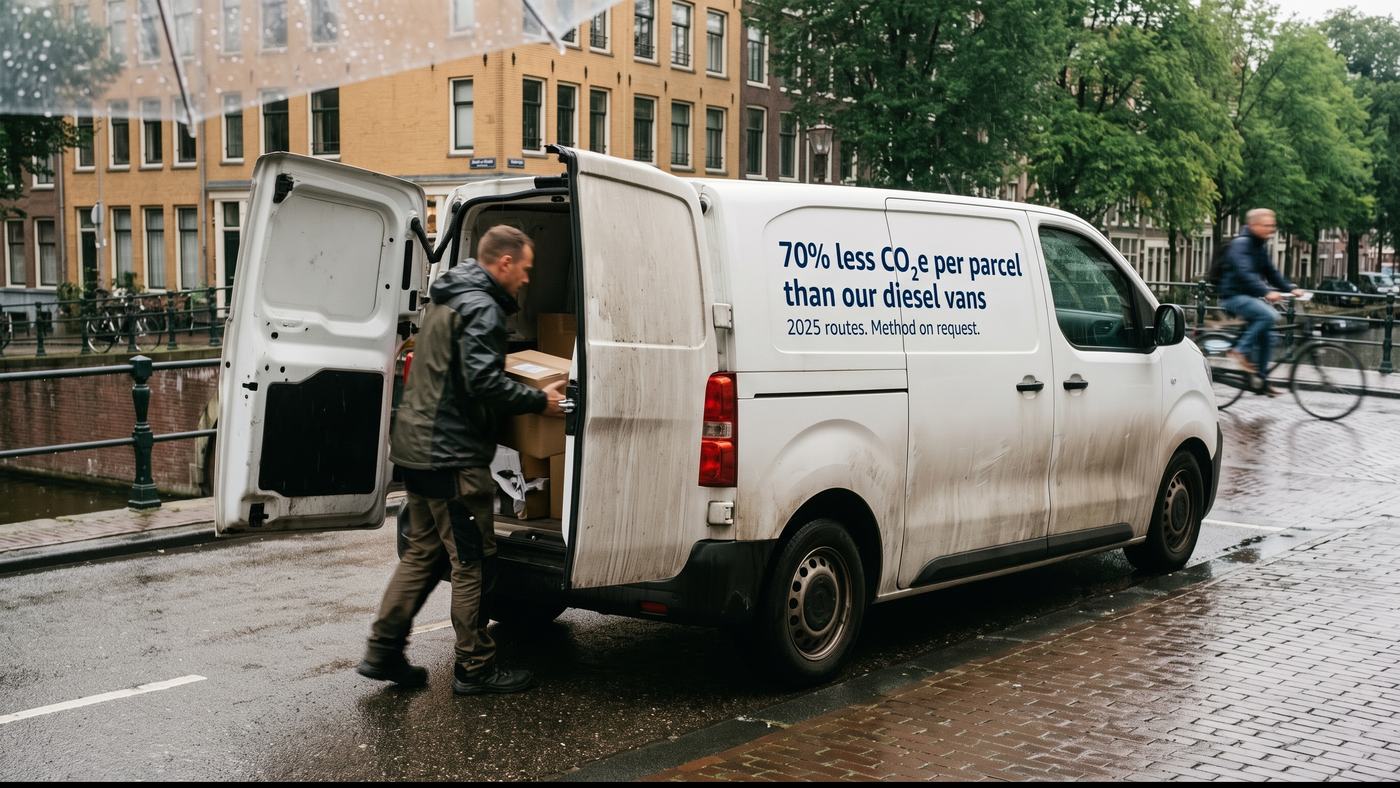
A percentage with no baseline
Compared to what? Name the comparison and where the number comes from. A percentage without a baseline is a feeling, not a claim.
Drag the bar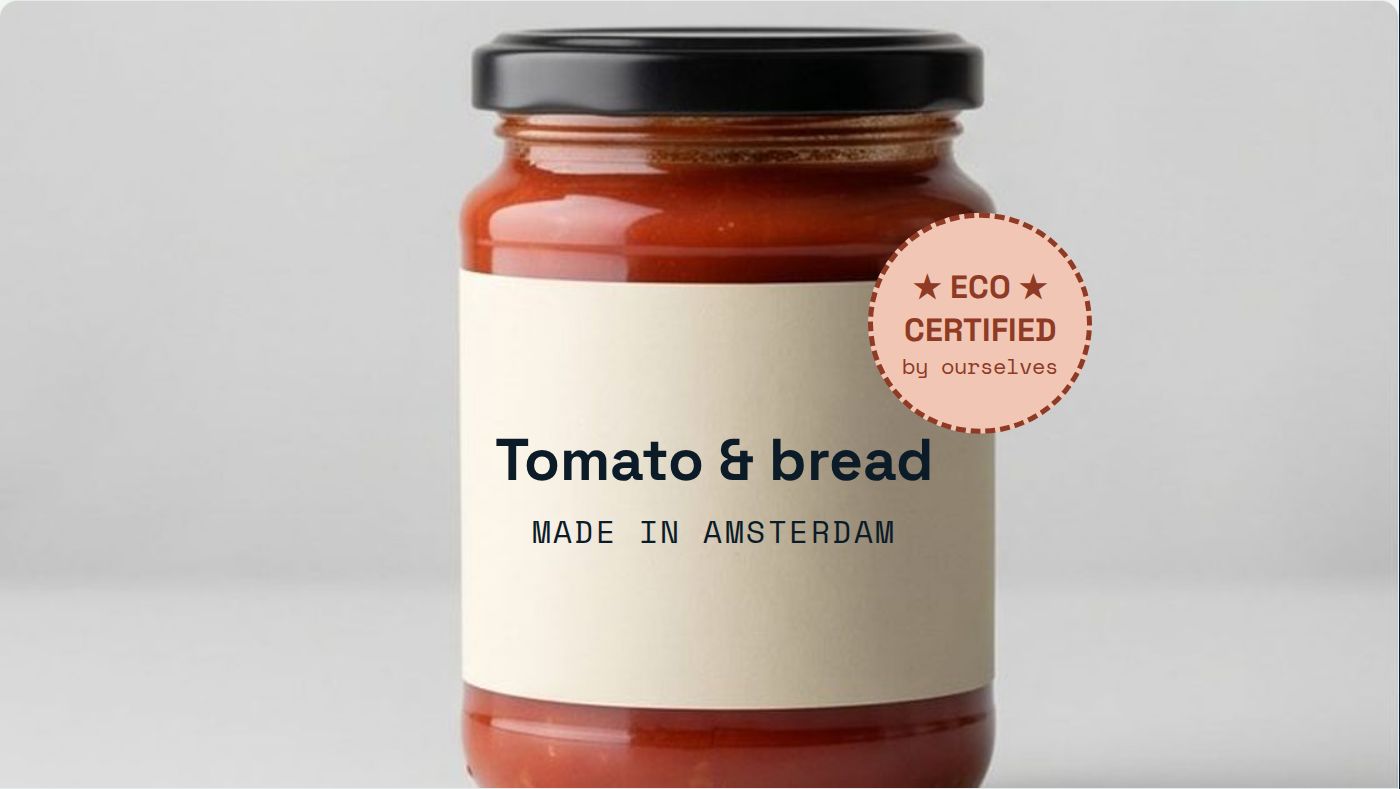
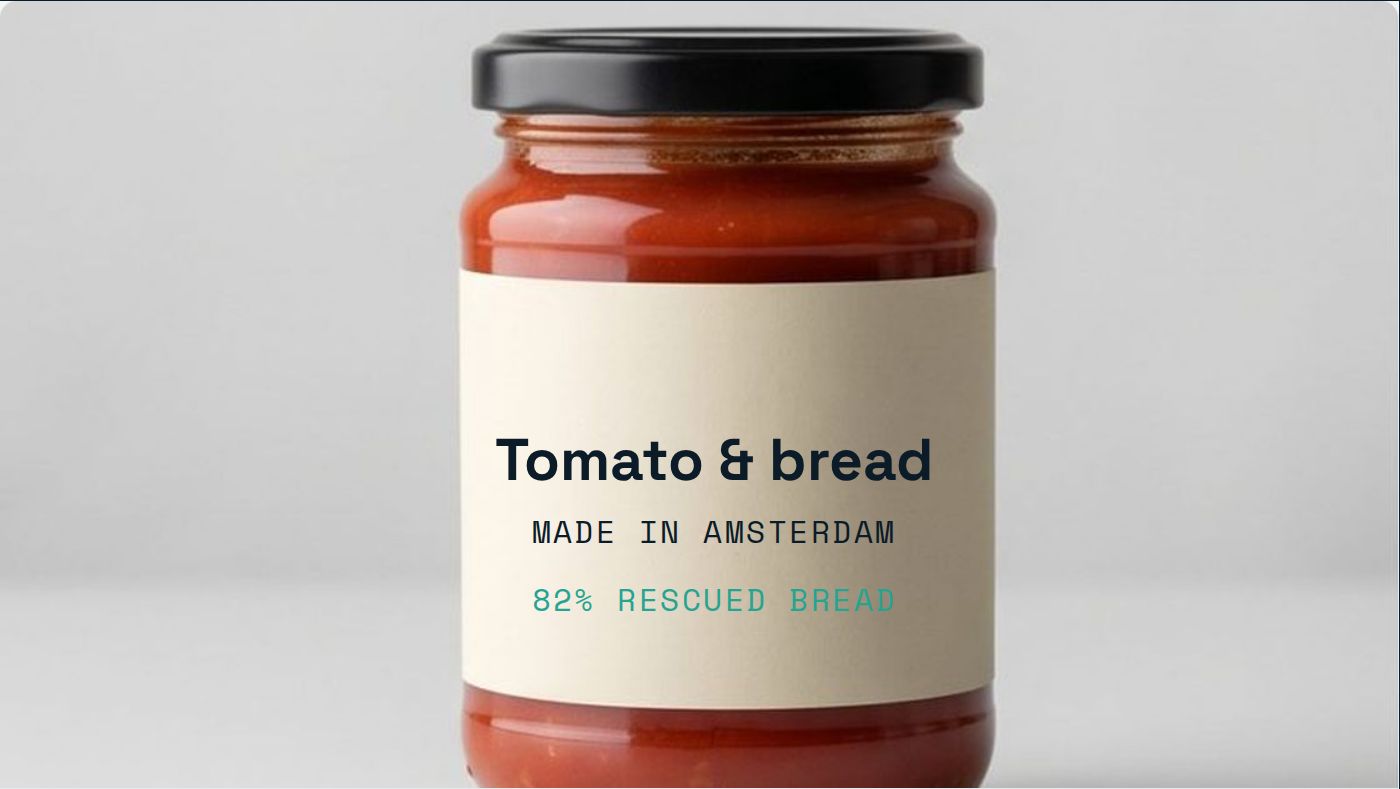 Claim as publishedWhat it should say
A homemade badge
A circle that says "eco certified" with no scheme behind it is now a banned practice. Either get the real certification, with the scheme's name on it, or drop the badge and let the label speak.
Drag the bar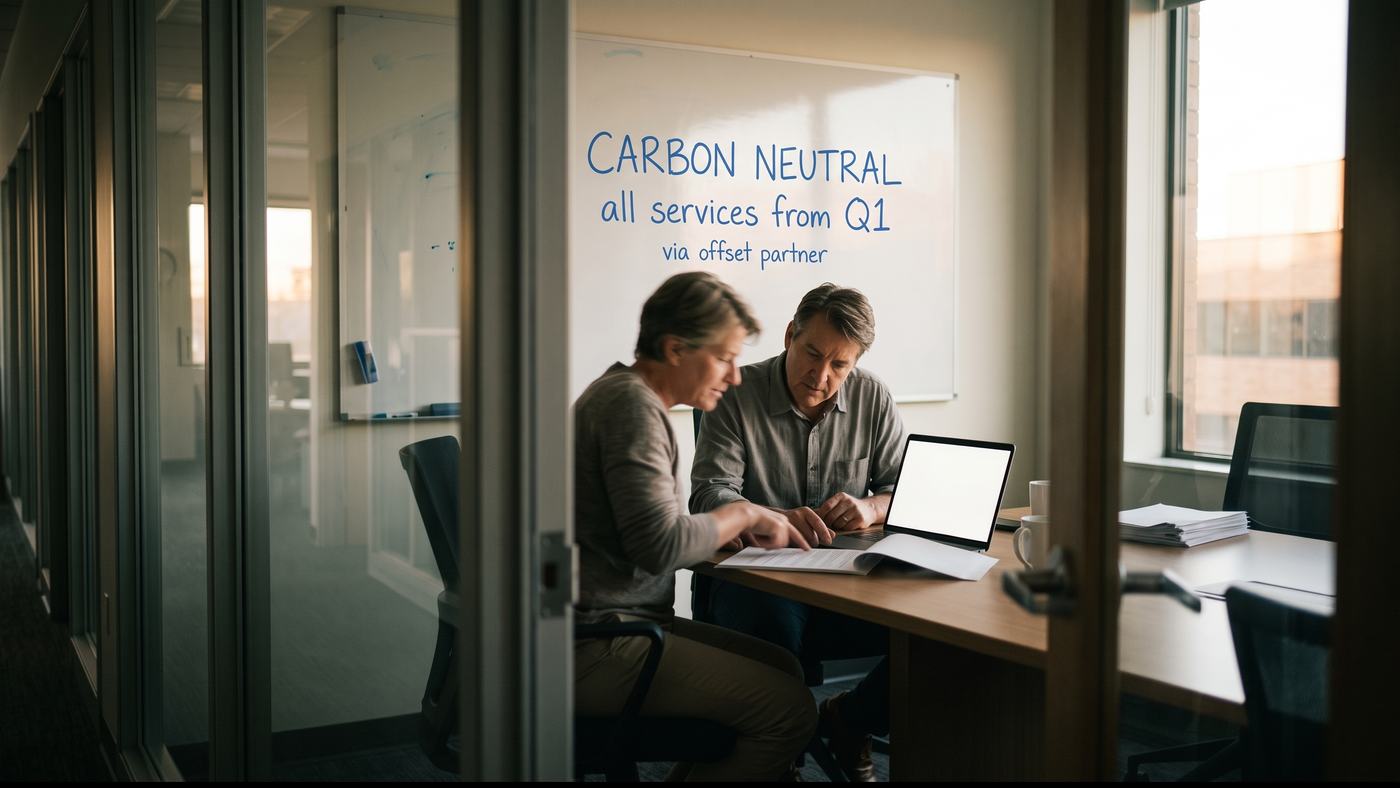
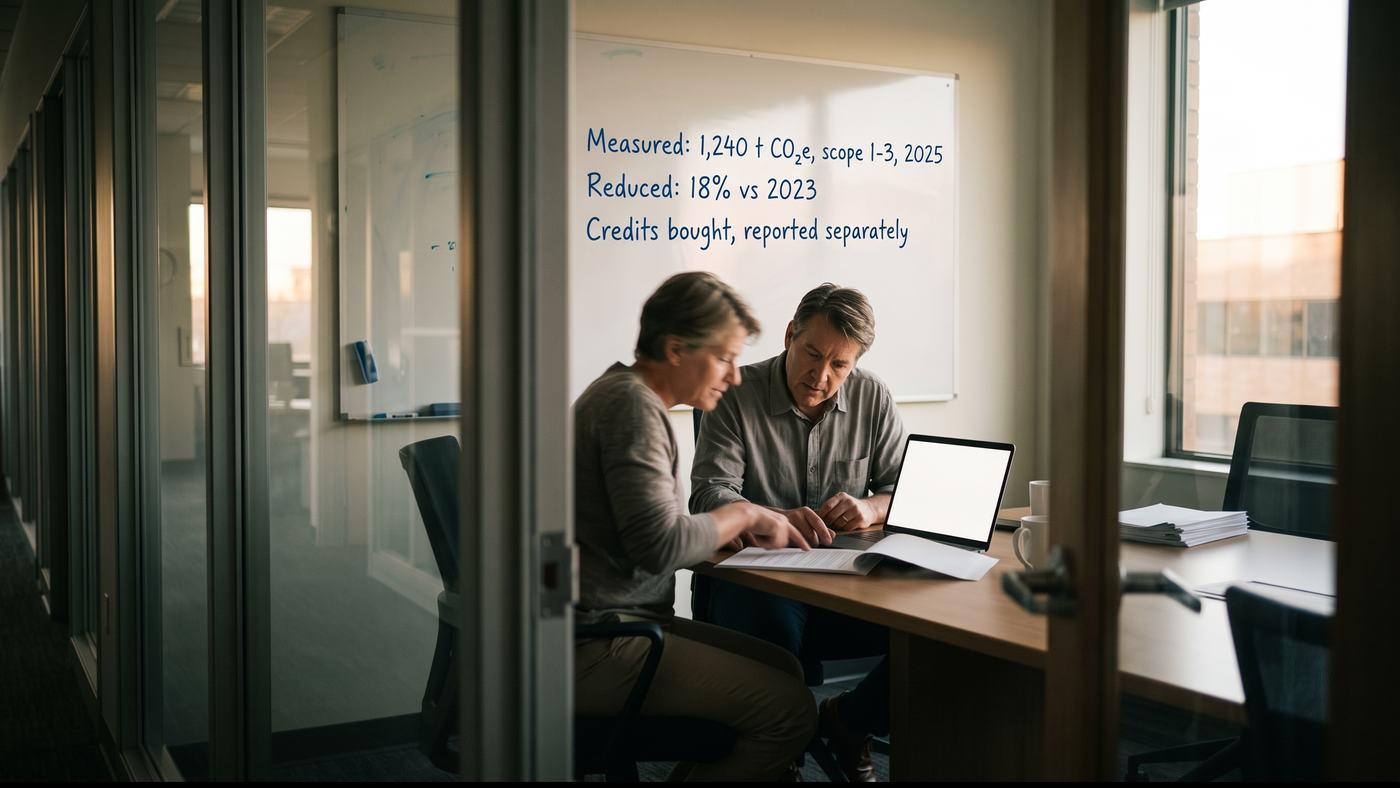 Claim as publishedWhat it should say
"Carbon neutral" via offsets
Say what you measured and what you reduced. Keep the offsets in a separate sentence, described as what they are. This is the one we see most on B2B and services websites.
Drag the bar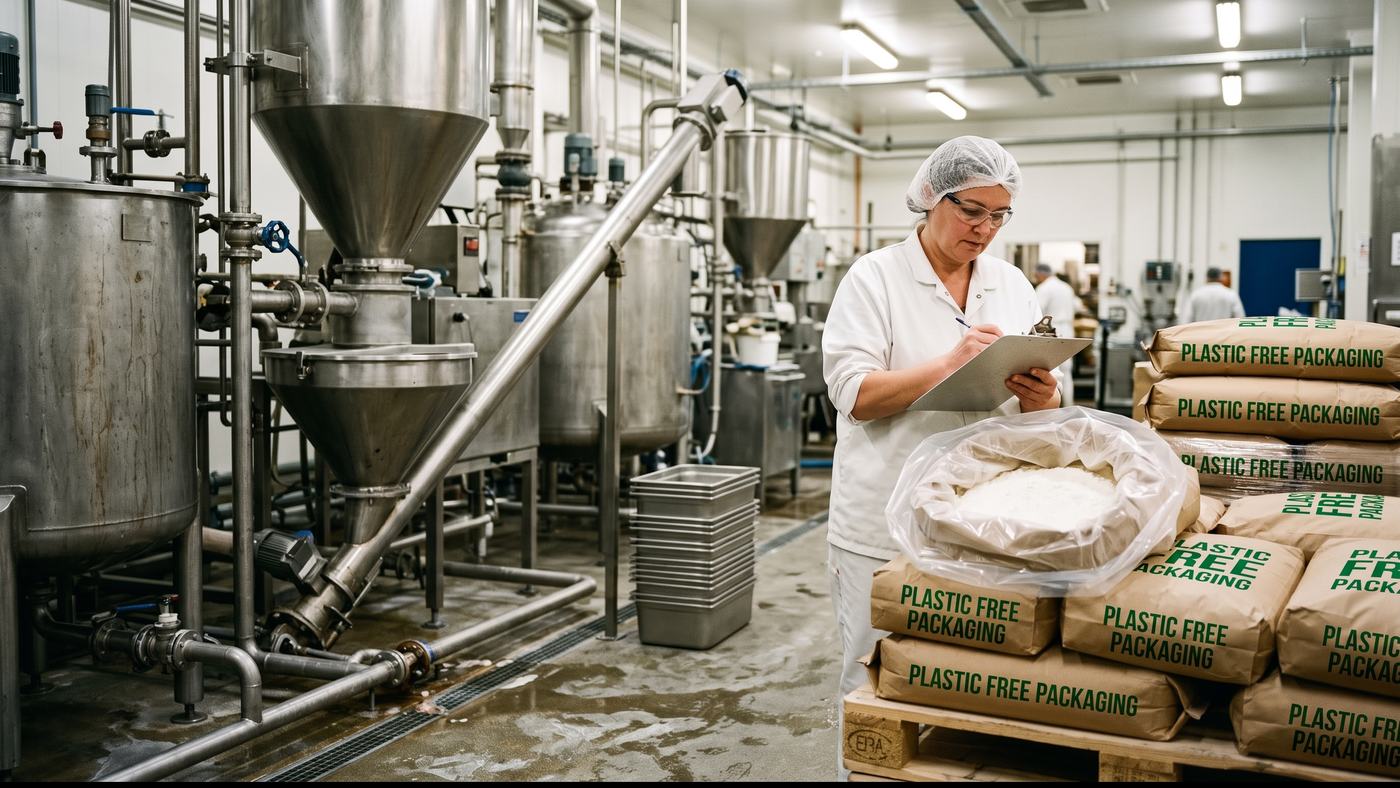
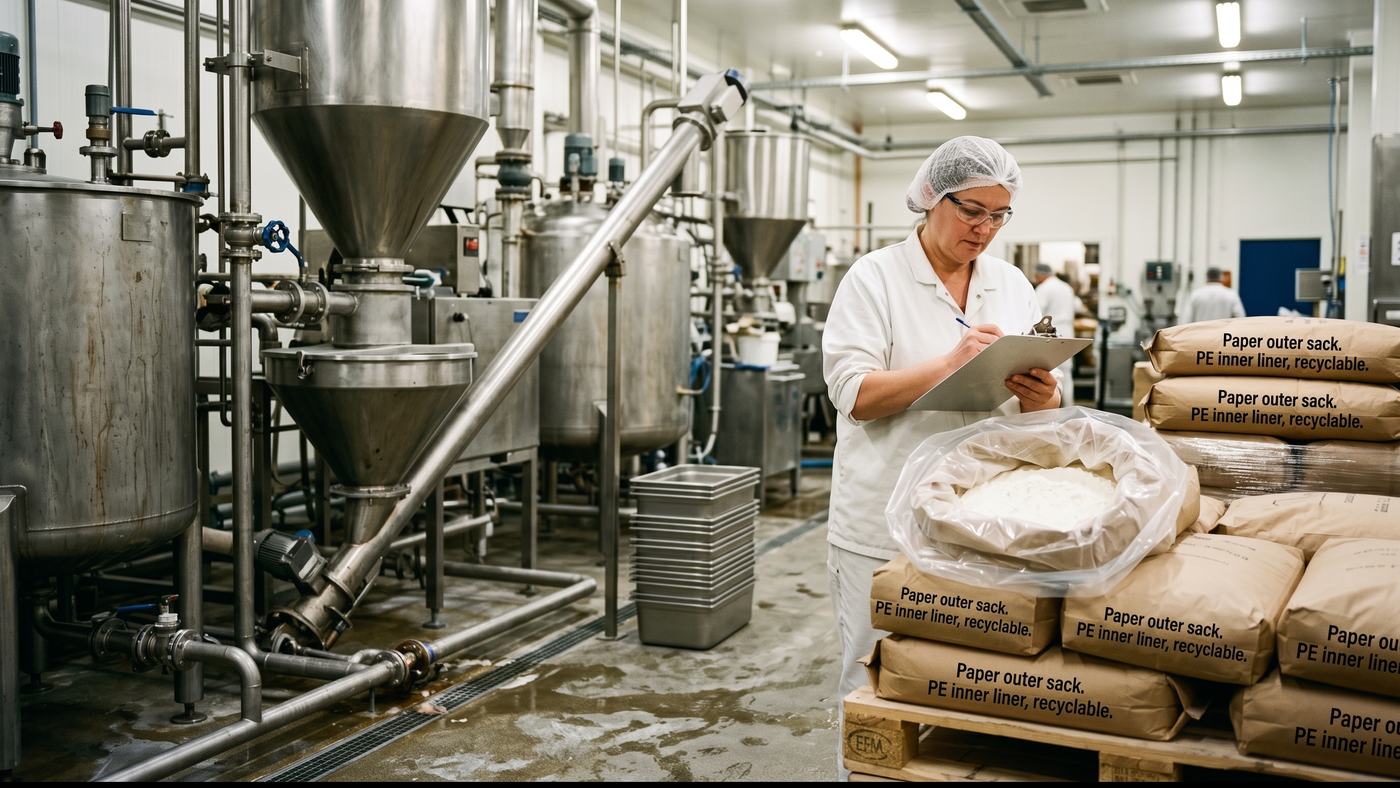 Claim as publishedWhat it should say
A whole product claim for one part
Be precise about which part. "Plastic free packaging" printed on a paper sack with a plastic liner inside it is exactly the kind of claim the directive names.
Drag the barThe scenes are staged and the companies and figures in them are fictional examples. Drag each bar to compare the claim as published with a version that would survive a question.
05Our take
Regulation didn't invent any of this. What it did is turn a vague marketing habit into a legal exposure, and that changes who in the company has to care. The founders we work with usually welcome it, once they see that the specific version of their claim is stronger than the generic one anyway.
If you're going to put a number on your website, show where it came from, what it covers and what it leaves out. That was good practice before September. Now it's also the rule.
Paste a sentence from your website.
We'll flag the words the directive treats as generic. It's a first pass, not legal advice, and it can't tell whether your number is true.